
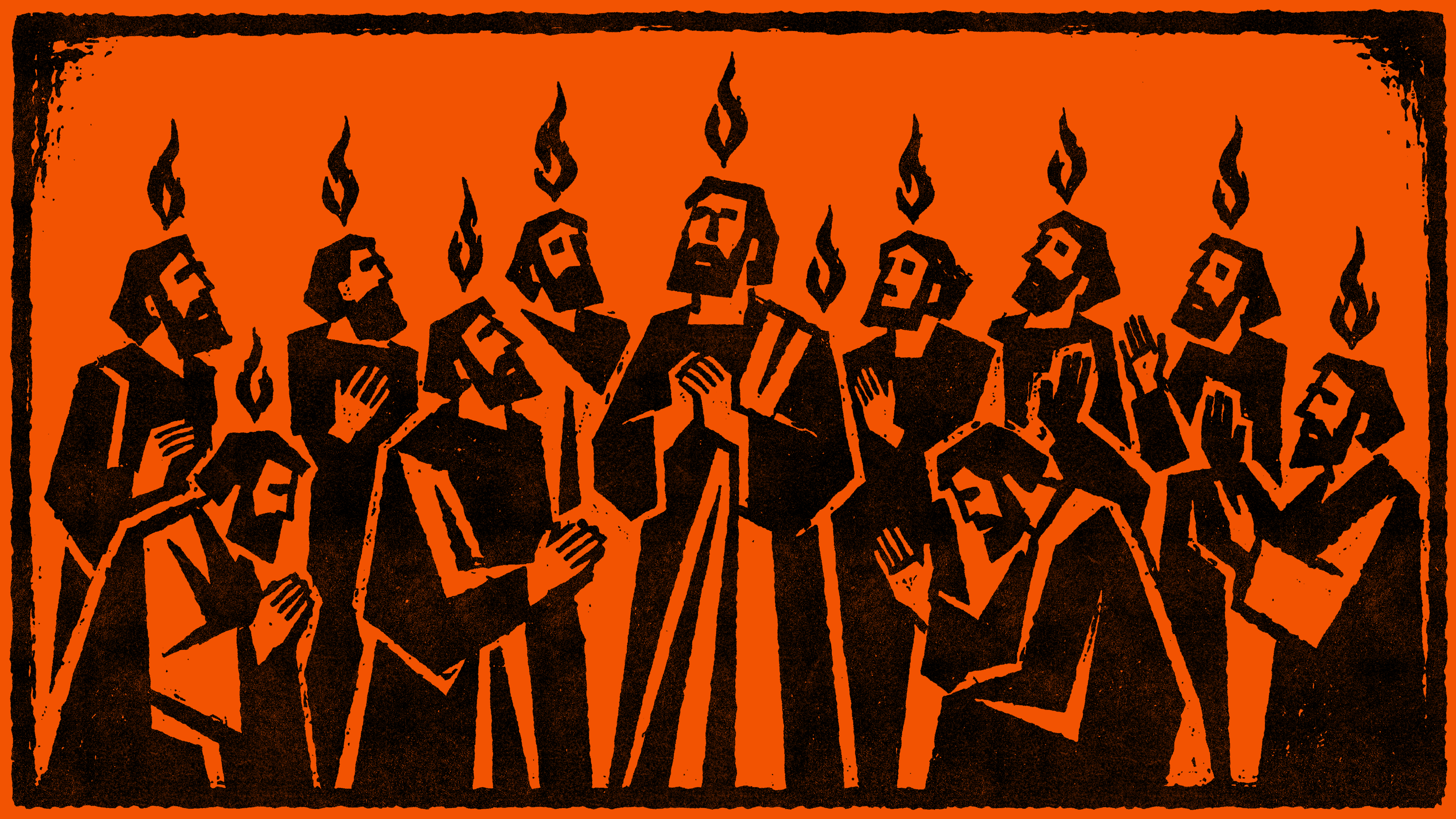
I attended an Assemblies of God school, where I earned my bachelor’s degree in pastoral ministry. I then spent years as an ordained Assemblies of God pastor. I worshiped with people who spoke in tongues, gave prophecies, prayed for healing, and expected the gifts described in Acts and 1 Corinthians to continue in the Church. Today, I am no longer an Assemblies of God minister. More importantly for this essay, I no longer find continuationism easy to defend.
My doubts did not begin with Scripture, but with years of watching these gifts in practice. I do not like to say that. As a Protestant committed to the Bible, I am uncomfortable allowing experience to determine what Scripture is allowed to mean. So I find myself asking whether I have misunderstood the gifts, misread the relevant texts, or mistaken contemporary practices for the gifts Scripture describes.
In this essay, I will share five parts of this conversation that keep me in this place of tension. This is vulnerable for me because they reach into beliefs I once taught, practices I participated in, and the way I now read Scripture. Together, they explain why I find the biblical case for continuation difficult to reject and the evidence for continuation difficult to accept.
What Is Supposed to Have Continued?
Before going further, it might be helpful for me to define what I mean by continuationism and cessationism.
Continuationists are those who believe that all the spiritual gifts described in the New Testament remain available to the Church. This includes prophecy, tongues, interpretation, healing, and miracles.
Cessationists are those who believe that at least some of these gifts belonged to the apostolic period and are no longer given to the Church. This usually refers to the revelatory and miraculous gifts, not gifts such as teaching, service, generosity, or leadership.
This does not mean cessationists believe that miracles are impossible. A cessationist may believe that God still heals people and answers extraordinary prayers. What has ceased, in this view, is the giving of miraculous gifts as continuing ministries within the Church.
1. The Text Seems to Favor Continuation
The New Testament gives no clear instruction to separate temporary gifts from permanent ones. Or that there are even “permanent” or “temporary” gifts. Without a clear reason for making that division, it takes some real hermeneutical origami to fold Paul’s lists until only certain gifts disappear.
In 1 Corinthians 12, Paul places prophecy, tongues, healing, and miracles alongside faith, wisdom, knowledge, and discernment. He says that the Spirit distributes all of them throughout the congregation for the common good. Paul then tells the Corinthians to desire prophecy and not forbid tongues. He tells the Thessalonians not to despise prophecies, but to “test everything.” He says the Corinthians are “not lacking in any gift” as they wait for Christ to be revealed.
First Corinthians 13 says that prophecy and partial knowledge will pass away when “the perfect” comes and we see “face to face.” Seeing face to face sounds more like Christ’s return than the completion of the biblical canon. Peter also places prophecy and visions within the “last days.”
The strongest cessationist response begins with the end of apostleship. Paul refers to “the signs of a true apostle” in 2 Corinthians 12:12. Ephesians 2:20 describes the apostles and prophets as the Church’s foundation. Since the apostolic office and its foundational work ended, cessationists conclude that the gifts that revealed and confirmed the apostolic gospel also ended.
Yet these gifts were exercised by more than the apostles. Paul distributed them throughout the Corinthian congregation. Stephen and Philip performed signs and wonders. Agabus prophesied. Philip’s four daughters prophesied. The end of apostleship therefore does not establish the end of every gift associated with the apostolic period. Cessationists must still show that these gifts belonged only to the Church’s foundation rather than its continuing life.

2. Experience Raises a Different Problem
The New Testament gives me reason to believe these gifts continue. I want to believe they do. My difficulty is that years spent among Christians practicing them gave me little convincing evidence that what we called prophecy, healing, and tongues was what the New Testament describes.
Prophecies were often vague enough to survive being wrong. Impressions, desires, and ordinary observations were attributed to God. Failed predictions were revised or spiritualized afterward. The prophecies surrounding the 2020 election provide a clear example. Numerous Christian leaders prophesied that Donald Trump would win reelection and begin a second consecutive term
Moreover, the New Testament presents tongues as human languages unknown to the speaker. I often heard missionary stories about Christians suddenly speaking languages they had never learned but were known to their local audience. However, what I witnessed in the local church was never shown to be a language, and the interpretations could not be verified.
The early Pentecostal movement faced the same problem. Some believers thought they had been given foreign languages and went overseas expecting to preach without language training. They soon discovered that the people they hoped to reach could not understand them. What had been claimed as Chinese or another foreign language could not actually function as one.
Now, I firmly believe that false claims do not prove that the gifts have ceased. I also believe I have witnessed God act miraculously. Yet witnessing God heal someone in answer to prayer is different from witnessing the gift of healing operating as a recognizable form of giftedness. After years within continuationism, I remain unsure that I have witnessed prophecy, tongues, interpretation, or gifts of healing in the sense described in the New Testament.

3. Perhaps “Possessing a Gift” Is the Wrong Frame
One possibility is that I have misunderstood the nature of giftedness. We often speak as though a spiritual gift were a resident ability. The healer carries a supernatural ability roughly as the teacher carries an ability to teach.
But Paul does not introduce 1 Corinthians 12 with the word gift. The Greek in verse 1 refers more broadly to “spiritual things.” A few verses later, Paul speaks of “varieties of gifts,” “varieties of service,” and “varieties of activities.” He then calls what is given to each believer “the manifestation of the Spirit” and says that the Spirit distributes these things “as he wills.” Paul returns to the word gifts, but it is not his only category.
That broader language matters. Gift sounds like something a person possesses. This is why we take spiritual gifts tests. Yet no one asks whether we have taken a spiritual manifestations test, a spiritual services test, or a spiritual activities test. Paul uses all four terms for the Spirit’s work through the Church. Perhaps some miraculous gifts were occasional manifestations of the Spirit rather than powers Christians could exercise whenever they chose. His phrase “gifts of healings,” with both words in the plural, at least allows for that possibility.
This would explain why healing was not always available even during the apostolic period. Paul prescribed wine for Timothy’s stomach. He left Trophimus sick in Miletus, and Epaphroditus nearly died. Perhaps gifts of healing were occasional rather than controllable. However, if the gift means only that God sometimes heals when Christians pray, have we preserved the New Testament gift or changed its meaning?
4. Prophecy Is Harder
Now, healing concerns something God does. Prophecy concerns something God says. So, either God miraculously healed the broken leg or he did not. Either God disclosed a message or he did not. Our ability to determine what happened may be incomplete, but the event itself is not partly true.
This makes prophecy harder to evaluate because several questions become entangled. Did God reveal something? Did the person understand and report it correctly? Did the hearers interpret it properly? Was the message predictive, conditional, symbolic, or exhortative?
Continuationists often appeal to Paul’s instruction: “Let two or three prophets speak, and let the others weigh what is said” (1 Corinthians 14:29). They understand this weighing to mean that genuine prophecy may contain divine revelation mixed with human misunderstanding. The Church receives what came from God and rejects the rest.
Cessationists read the same command as a test of whether God spoke at all. Weighing separates true prophecy from false prophecy, not truth from acceptable errors within a genuine prophecy. The command itself does not settle which reading is correct.
At this point, a brief detour into food manufacturing may help explain my concern. The FDA sets limits for unavoidable defects in food. Fig paste can contain some insect material and remain below the level that triggers regulatory action. It still receives, in effect, the FDA stamp.
That may be reasonable for manufacturing Fig Newtons. But is prophecy supposed to work the same way? Does a message retain the label of prophecy as long as its human contamination remains within acceptable limits?
Christians can mistake desires, fears, memories, and intuitions for the Holy Spirit. We can also draw conclusions beyond what we were given. But if God spoke, what he said is true. I have difficulty calling a statement containing falsehood something God said.
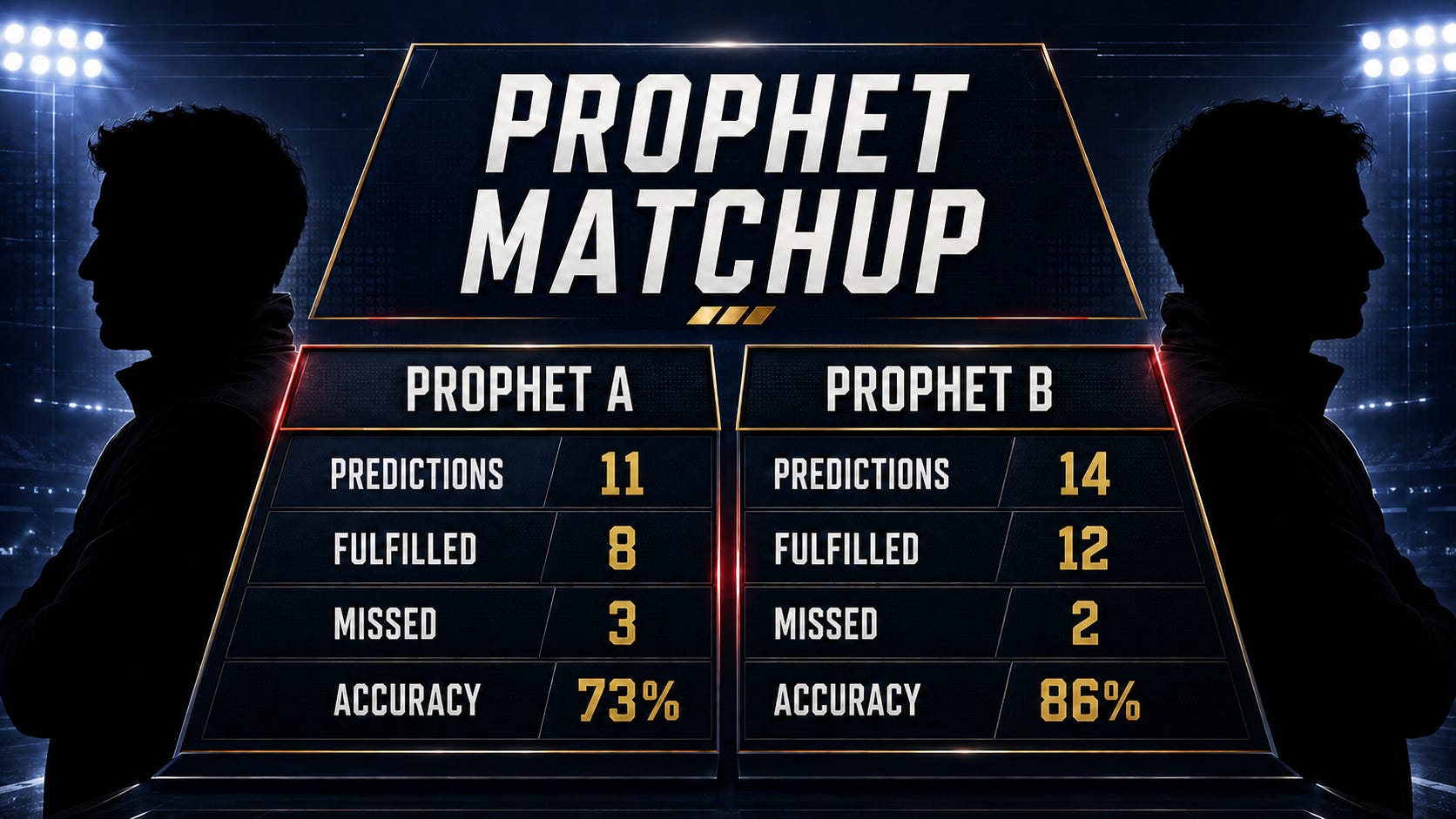
Fulfillment alone cannot authenticate prophecy. Deuteronomy 13 warns that even a sign that occurs does not prove the speaker comes from God. But when someone says God predicted an event and it does not happen, lowering his prophetic accuracy rating does not solve the problem. Christians make mistakes. The question is whether we should call those mistakes prophecy.
5. Would We Have to Add It to the Bible?
Once I insist that genuine prophecy must be true because God does not speak falsely, a cessationist objection follows. If God still gives true words through prophets, why should those words not be added to Scripture?
I do not find this objection convincing because it assumes that every genuine prophecy belongs in the canon. The Bible itself shows otherwise. Obadiah hid one hundred prophets of the Lord from Jezebel, but we do not possess their prophecies. Saul prophesied without his words being recorded. Philip’s four daughters prophesied, but Luke never tells us what they said. Judas and Silas encouraged the believers with “many words” as prophets, most of which were not preserved. Paul also refers to prophecies made about Timothy without recording them fully.
Not all genuine revelation became canonical revelation. A prophecy could be true, local, and given for a particular circumstance without becoming part of Scripture. Asking whether we should add it to the Bible does not answer the continuationist case.
The objection does point toward a better question. If God continues to speak through prophecy, what authority do those words carry?
A local prophecy might not establish doctrine for the whole Church or carry permanent authority for every Christian. But if God actually said it, then it is true. The people to whom it is addressed cannot treat it as an interesting suggestion.
Sola Scriptura identifies Scripture as the Church’s only infallible rule of faith. It does not require every word God has ever spoken to appear in the Bible. Ongoing prophecy would still introduce true and authoritative words from God outside the canon. The harder question is how such words can remain subordinate to Scripture while carrying God’s authority for those who receive them.
What Must Each Side Explain?
The New Testament never directly says these gifts will cease, but that alone does not disprove cessationism. A doctrine may follow from the combined teaching of several passages. Cessationists can build a cumulative case from the end of apostleship, the foundational role of the apostles and prophets, and the use of signs to confirm their message. Their burden is to explain why gifts distributed throughout congregations and included in instructions for church life belonged only to that foundational period. The end of apostleship does not establish that conclusion by itself.
Continuationists also carry a burden. It does not establish that what currently passes as prophecy, tongues, or healing is what Scripture describes. A practice does not become a spiritual gift because it claims the name or because our theology says the gift should continue. Continuationists must show both that the gifts continue and that their contemporary examples are actually those gifts.
The Comments Are Open
The comments are open, and I welcome correction. If I have overlooked a passage, misunderstood the nature of a gift, or framed either position unfairly, tell me where. I am especially interested in arguments that engage the biblical texts and examples that can be meaningfully tested.