
I often tell people I never planned to be here. I didn’t plan to live in the Pacific Northwest, to work in chaplaincy, or to serve at Open House Ministries. If you knew my story from the start, you’d understand why. I grew up in San Diego in a family that loved Jesus, with parents and grandparents who prayed for me and passed down a faith that shaped my life in deep ways. Yet even while growing up surrounded by faith, I sometimes wished I could unknow God. If He was real, then His boundaries meant my impulses couldn’t rule me. I mistook that restraint for control, not knowing it was the beginning of a better story than the one I was trying to write. Only later would I see that obedience is the doorway to joy.
When I graduated from high school, and enrolled in community college. I had no master plan for my life. I eventually found joy and some minor success in creative writing. I poured myself into stories and even had a few short pieces published. On the surface, it was the success and recognition I thought would make everything more meaningful. But even this felt like a dead end.
Then came a moment that changed everything, but not all at once and not in the way anyone would have expected. Late one night, driving home with a friend, we pulled into a Jack in the Box drive-thru. I was in the passenger seat of his beat-up Mazda when he turned to me and said, “I think your life’s coming to a crossroads.”
He wasn’t the type to say things like that. He wasn’t especially insightful or spiritual. We mostly hung out to skateboard and listen to music. But somehow he named what I hadn’t been able to. I was restless. I could feel God pulling me toward something deeper and more real than all the shallow substitutes I had filled my life with.
Even though I was apparently blind to it, the people closest to me could sense that I was lost and confused. This was especially true for Sarah, my girlfriend at the time. Her love for Jesus was steady and unashamed. The contrast only made the crossroads feel sharper. It was as if I were standing between two roads.
That night, I knew I couldn’t keep running from God. I wish I could say I surrendered all at once, but the truth is it took months of wrestling. Real surrender came slowly. It meant more than a feeling. It meant rearranging my life around God.
For me, that started with getting serious about church and putting distance between most of my friends. Sarah and I began attending a small congregation of about 200 people near downtown San Diego. As my faith deepened, so did my commitment to Sarah. The question of marriage stopped being “someday” and started to become part of what obedience looked like.
Life began to take on a new rhythm. Sundays, we spent nearly the entire day hanging around the church. A discipleship class in the morning, worship service after that, and then in the evening, we returned to participate in an outreach program to people living on the streets downtown. We handed out sack lunches, prayed with people, and listened to their stories. Week after week, I came back, not out of duty but because I found a joy there that nothing else could match. Something in me was waking up. I wasn’t just believing in God anymore. I was learning what it meant to belong to Him.
I didn’t have language for it at the time, but that was the beginning of a much bigger call. I might have grown up in the church, but I had no idea how a pastor became a pastor. I knew more about how a firefighter or a police officer got their job than I did about ministry. In my mind, a pastor was just the man who stood far up front on Sundays and did… well, whatever it was pastors did. But none of that mattered in those early days. I was falling in love with studying the Bible. I was falling in love with serving. And really, I was falling in love with Jesus.
Somewhere in the middle of all this, I started quietly sharing with a new friend at work about this joy growing in me. I didn’t think of it as a “calling.” I just knew I loved studying the Bible, helping others, praying with people, serving at church—and I wanted to do more of it. Around that time, one verse kept echoing in my mind: “Whoever aspires to be an overseer desires a noble task” (1 Tim. 3:1). I had read it before, but now it wouldn’t leave me alone. Was this what calling felt like? Not a light from heaven or a road-to-Damascus moment, but a steady desire that refused to fade.
At the time, I was working in a grocery store, and after telling my friend what was stirring in me, he said, “You should talk to Pastor Jim over in produce.” I laughed it off. I didn’t know “Pastor Jim,” and I certainly wasn’t going to pour out one of the most vulnerable things I’d ever felt to a guy stacking apples. But my friend went ahead and told him anyway. A few days later, all five-foot-six of Pastor Jim walked up to me and said, “So, I heard you want to be a pastor.” I remember thinking, What? No, I don’t. That’s like five, ten, maybe a thousand steps away from where I am.
But Jim, it seems, didn’t really listen. He told me their church was looking for a youth pastor and that I should come talk with the board that evening. So that evening, I showed up at a church I’d never been to, to talk with people I’d never met, about something I wasn’t even sure I understood. I sat nervously in front of the board, explaining all the reasons they shouldn’t hire me. I told them I had no experience, I barely attended youth group myself as a teenager, and I had no formal training.
What I did have was a deep love for Jesus and his church. I’d been reading and studying the Bible in all my spare time, and serving wherever there was a need. I gave them every reason to turn me down, yet what they heard was something very different from the doubts I carried. They saw something in me I couldn’t see in myself, and they offered me the job. I was to start in two weeks, just after Sarah and I were married.
Those early days in youth ministry were full of trial and error. I was figuring it out as I went, often feeling way in over my head. But that church, like Pastor Jim, seemed to hear God’s call in me even before I did. They gave me room to grow, to make mistakes, and to learn what shepherding people actually meant.
It was in that same season, still stumbling my way through youth ministry, that I began to sense God’s call. One night after a youth event, a student’s ride never showed. Things happen, we thought, parents fall asleep, so after a while of waiting, we drove her home. When we got to her apartment, the lights were off, the door was locked, and her mom was gone. The student knew what this meant before we did. Mom wasn’t coming back anytime soon. She hadn’t forgotten her. She just didn’t care enough to remember.
This student wore a tough shell most days, but that night it cracked. Tears streamed down her face as we sat in silence. Sarah and I didn’t have answers. All we could offer was our presence. So we stayed, sat, prayed a little, and didn’t leave her alone that night.
As we drove away from the experience, I remember driving home in silence. Sarah was sleeping, and I couldn’t stop thinking. Something in me had shifted. I didn’t have a name for it yet, but I knew I wanted my life to keep showing up in places like that. Looking back, it wasn’t an accident; it was one more way God was already ahead of me.
Yet just as my desire to serve was growing stronger, life took an unexpected turn. My transfer from community college to a university fell through at the last minute. I had followed my pastor’s advice to finish school before thinking about seminary, so I was working full-time, waking up before dawn to drive a delivery truck, then spending my evenings planning youth events and leading ministry. It was exhausting, but I loved it.
When that transfer was denied, the plan I’d been following disappeared overnight. There was no next step, no clear direction — only another crossroads. By then, I was two years into ministry, and God had confirmed that call through the people around me, through the fruit I was seeing, and through the encouragement of church leaders who recognized what He was doing in my life. With my own plans collapsing, the question changed. Instead of asking how to fit ministry around my life, I began to ask how to build my life around ministry.
That’s when the idea of formal theological education stopped being “maybe someday” and became a real decision. A decision that would cause even more upheaval.
California schools were expensive and offered no clear way forward. Then a school in Texas came onto our radar. We knew nothing about Texas. We had no family there, no friends, and we had never even visited. I was a Southern California skateboarder. Texas might as well have been another planet. Yet for reasons I couldn’t explain, every path seemed to point that way.
So we took a deep breath and stepped into the unknown. Leaving meant saying goodbye to our church, our community, and everything familiar. We packed our little apartment, loaded what we owned into a truck, and drove halfway across the country with no job and no safety net. It felt risky, even reckless, if not for the growing conviction that this was exactly where God was leading us.
Those next few years were stretching. We were far from home, raising our first son, and learning how to build a life in a place that had once felt foreign. I served as a youth and associate pastor at a small church near Fort Worth, about fifty miles from our apartment. By the time I graduated, I knew my calling was bigger than student ministry, though I still didn’t know where it would ultimately lead.
One of my dreams after finishing my undergraduate degree was to keep going. Pastor Jim had always urged me to take school seriously. I hadn’t been a high achiever coming out of high school. My parents hadn’t gone to college, and no one in my extended family had either. Graduating wasn’t guaranteed for me. Yet by God’s grace I did, and I was determined to keep going.
I enrolled in seminary right away. Dallas was home to two schools I had long admired, and I couldn’t decide between them. So I applied to both. When I was accepted at each, I still couldn’t choose, so I began attending classes at both for the first few weeks. In time, it became clear that my struggle wasn’t about which school to attend but whether either one was where God wanted me. A heaviness settled in. In prayer, I couldn’t shake the sense that neither place was right for me. It made no sense. This had been the plan all along, the reason we had moved to Texas. This was supposed to be the next step, and now it was all crumbling.
Then the 2008 financial crisis hit. The economy collapsed, and churches everywhere began laying off staff, including the one I served. I had just finished school, expecting new opportunities after taking the risk of moving Sarah and me across the country. Instead, we found ourselves raising a child while struggling to make ends meet on a part-time church salary. Seminary was no longer an option. It felt like the bottom had fallen out. I remember praying, “God, what are You doing?”
Out of desperation, I reached out to leaders in the church network I was part of to ask about ministry positions for new graduates. Their response was blunt: “There are no jobs. If you want to be a pastor, you’ll have to plant your own church.”
Plant a church? I had never even heard the term before. When they explained it — starting from nothing, gathering people, building a new community of faith — the idea felt overwhelming. I began talking with a few friends about doing it together, but one by one they declined. No one wanted to take the financial risk.
So I picked up the phone and called Pastor Jim. His answer was simple: “If you can make your way back to San Diego, I can set up a meeting with someone for you.” Not a job. Not a promise. Just a meeting.
So we did. We broke our lease. We left our jobs. We said goodbye to the friends we’d made. And with no guarantees. Only a fragile faith that God was still leading. We packed everything up and moved back to California.
Coming back to San Diego meant starting over from scratch. We had nothing. We were worse than when we left for Texas. We soon had another mouth to feed, and I needed work that could pay rent and keep a roof over our growing family.
The meeting Pastor Jim arranged set me on a road I had never traveled. I was learning how to raise support, talk with strangers about a vision I barely understood, and gather people to start something new. I was twenty-six and had no idea what I was doing. If there was a right way to plant a church, we probably didn’t do it. It felt less like launching one and more like tripping and accidentally setting one off.
18 months later and two weeks after our second child was born, we opened the doors of a small community arts center in a neighborhood just north of downtown San Diego. It was humble and makeshift — folding chairs, a few pieces of equipment, and a handful of people who showed up more out of curiosity than conviction. But slowly, it became a church. Over the next several years, that little gathering grew into a community made up mostly of people who had no church background at all — artists, skeptics, young families, people carrying deep wounds from religion or simply trying to figure out who God was.
During that season, the Lord opened a door for me to attend seminary, this time in Portland, Oregon, at Western Seminary. They offered a master’s program that required me to be on campus only one week each semester. It was a big commitment in an already full season, but I knew that giving all of myself to God included giving Him my heart, soul, mind, and strength. We signed up for a credit card with air miles and saved every point we could to cover the flights to Portland.
Pastoring that community in San Diego was both beautiful and brutal. I preached to half-empty rooms, baptized new believers in inflatable pools, and spent countless hours over coffee or tacos listening to stories that sounded a lot like my own. I made some of the best friends of my life in those years. It was messy and unpredictable, often discouraging and deeply meaningful all at once. I had a front-row seat to lives being reshaped by grace, even as God was still reshaping mine.
It was a young church, and in many ways it showed. During those first four years, I led dozens of weddings and oversaw many baby dedications. Yet not a single funeral. Ministry felt full of beginnings, untouched by the harder parts of life. I once told a friend who volunteered with hospice that I wished I had more experience sitting with people in their suffering.
Yet before I could do anything with that, life came to a screeching halt. Sarah received a devastating, life-altering diagnosis that changed everything. Her driver’s license was revoked, and even her personal safety could no longer be taken for granted. In an instant, every sense of normal we had been carefully building came undone. Work became uncertain, daily life required constant vigilance, and the doctors had no clear answers.
I used to think I didn’t struggle with control. But when life suddenly spun beyond my grasp, I saw how much I depended on it. I craved it. Like every idol, it was exposed the moment it failed to save. I couldn’t protect the person I loved most, and that helplessness cut deep. Even school, which had once been a source of joy and growth, became a struggle. I couldn’t travel for classes without worrying about what might happen at home. Everything grew complicated and heavy, and I began to wonder why it all had to be so hard—if I should quit, or if maybe this wasn’t the right time after all.
As if that weren’t enough, some of the leaders in our church used that season to criticize me. They said we were too focused on caring for our own family and not focused enough on serving the community. It was devastating and became one of the darkest, most disorienting seasons of my life.
Thankfully, that season eventually came to an end. By God’s grace, the doctors found a treatment that brought Sarah’s condition under control, and life slowly found a new kind of normal.
I wish I could say that was the end of the pain, but it wasn’t. The tension in the church continued. The criticism, conflict, and weight of unmet expectations kept growing in different ways. It is often said that sheep have teeth, and I learned how true that can be in those years of pastoring.
Amid that tension, I applied for a hospital training program to serve part-time as a chaplain. I hadn’t lost my love for the church, but my heart was tired from carrying its wounds. The work at the hospital was different. I joined the palliative care team, though I barely understood what that meant when I started. I soon learned it was about walking with patients and families through the final chapters of life. I hadn’t known it at the time, but this was one of the first programs in the country to place chaplains directly in that space.
One afternoon, as I walked through the hospital, I was struck by how many people carried fear and grief with no one to guide them. Jesus’ words came to mind—how He looked on the crowds and “had compassion for them, because they were harassed and helpless, like sheep without a shepherd” (Matt. 9:36). That was what I was seeing all around me. In that moment, I knew I was exactly where I was supposed to be.
After a few years, I was offered a full-time position. I met with my church leaders to talk about what it might look like to serve both as their pastor and as a chaplain. In many ways, the hardest years were behind us, and they hoped I would stay. But I couldn’t ignore what was happening inside me. I was coming alive in chaplaincy in ways I never expected.
Still, it was not an easy decision. For years, I had viewed chaplaincy as a second-class form of ministry, something people pursued only when they could not pastor a church. Walking away felt like quitting. I wrestled in prayer, afraid of mistaking my desires for God’s will, yet the Lord kept confirming the same truth through Scripture, mentors, and conviction. I was not leaving the ministry at all. I was stepping deeper into it, bringing pastoral care into places the church often never reaches.
So I took the job, not knowing what was ahead. Between signing the contract and my first day, the COVID pandemic reached our shores. Overnight, church ministry went silent. There were no gatherings, no singing, no face-to-face conversations. Yet even as the world was closing its doors, God was opening new ones. Families could not enter the hospital, and pastors were told to stay away, but I was invited in to sit with people when no one else could.
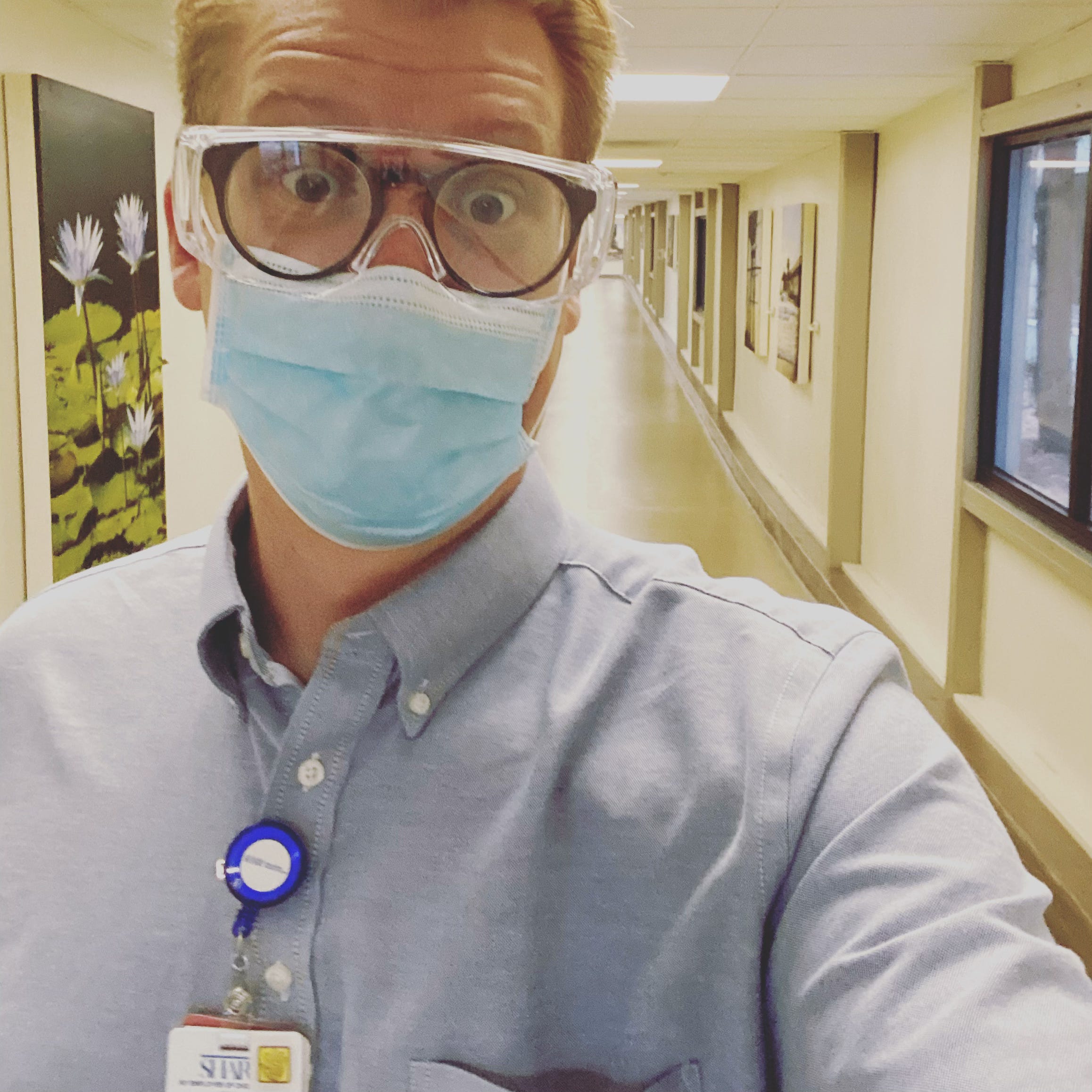
It was a season unlike anything I had ever known. The days were filled with chaos, confusion, and constant change. I witnessed more loss in a few months than I had seen in all my years of ministry. At the height of the pandemic, I spent entire days moving from room to room, sitting beside one patient after another as they took their final breaths. When the surge subsided, the losses continued in other forms: the aftermath of shootings, car wrecks, and overdoses. There were nights when the pager went off and I was called in for a fetal demise. I walked into rooms where the only sound was grief itself. The work was relentless, and the weight of it followed me everywhere.
The only reprieve in those days came on Sundays, when I worked in the emergency behavioral health and chemical dependency unit. It wasn’t my original assignment, but something I took on after a coworker left. That unexpected turn became one of the most meaningful parts of my ministry. Week after week, I sat with people wrestling with addiction, mental illness, trauma, and despair. I didn’t realize it then, but God was using those Sundays to prepare me for future work.
Before long, another crossroads appeared. My contract at the hospital was ending, and once again I faced the question of what came next. I loved the long work of pastoral ministry—preaching, teaching, walking with people over time—but I also loved the immediacy of chaplaincy, meeting people in crisis and walking with them through suffering. Yet neither felt complete on its own.
As I began exploring possibilities, a mentor asked me a simple question: “Have you checked the job board at your seminary lately?” Mind you, we were still in San Diego, the place we had once sacrificed everything to return to. Our roots were deep—family nearby, a home of our own, and a sense of settled obedience to where God had called us.
We had done everything that looked like obedience. But obedience also meant staying open to whatever came next. Sarah and I had been praying that dangerous prayer: “Wherever You want us to go, we’ll go.” We meant it, though I doubt either of us expected God to take us up on it. Then it appeared—a posting for a chaplaincy position in a town I’d never heard of, Vancouver, Washington, at a place I’d never heard of, Open House Ministries. It was beyond the walls of the church and the halls of the hospital. It felt as if God pointed to a blank spot on the map I’d never noticed before and said, “How about here?”
Yet, after all the searching, stepping into Open House Ministries felt like stepping into the kind of ministry I had been searching for all along. When we first moved, people would ask, ‘Why would you leave San Diego?’ My answer: if you knew what I get to do, the question is not why would I leave, but why would I have stayed and missed being a part of this.
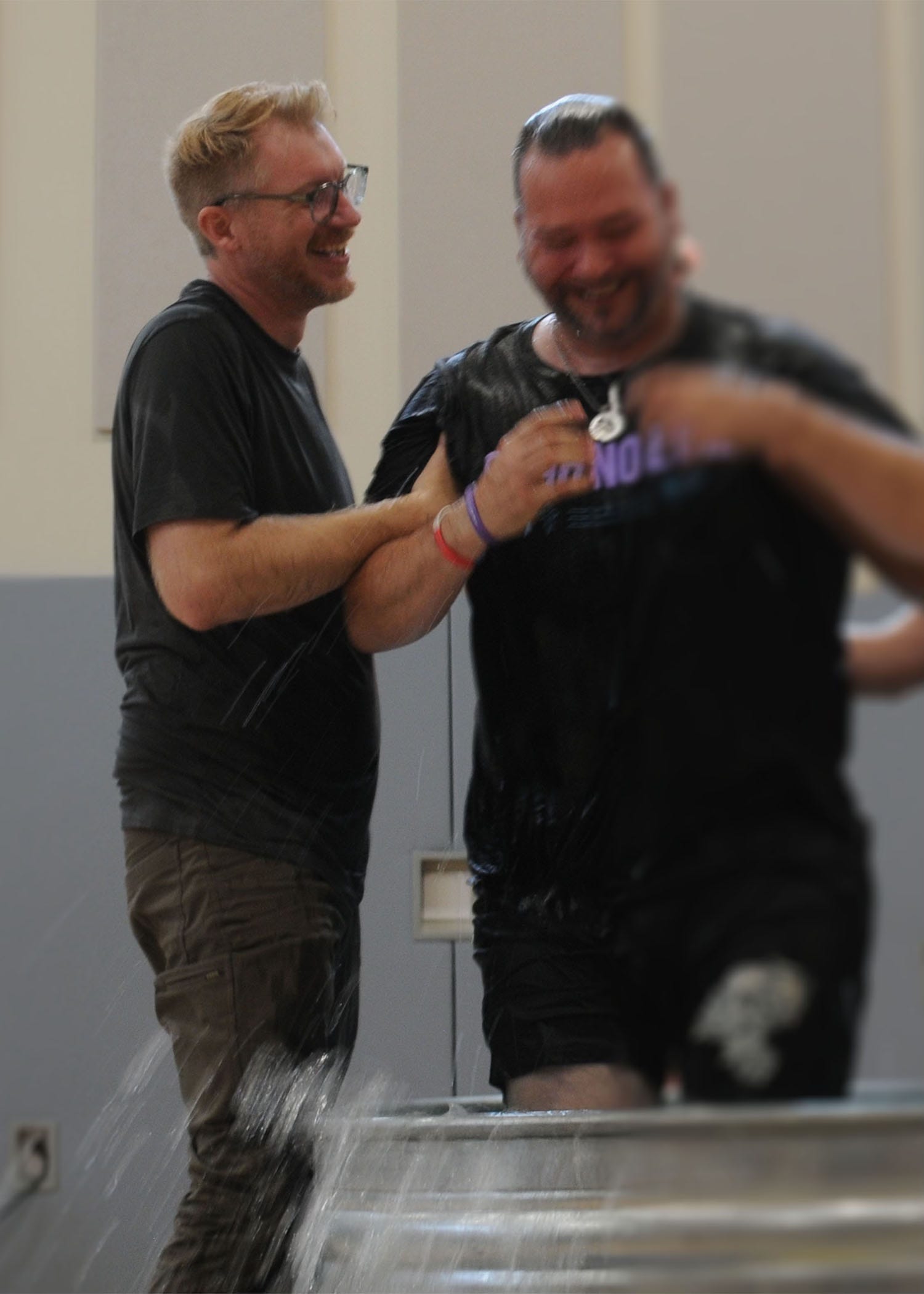
Even though it was a new beginning for me, I knew it was also a season of grief for Open House Ministries. They were mourning the loss of their longtime pastor and chaplain, who had faithfully served this community for many years. Stepping into that moment reminded me that our stories rarely unfold on our timelines. I hadn’t planned to be here, and Open House hadn’t planned to be without its shepherd, yet God in His providence was weaving the two together.
Yet that doesn’t mean I was a spectator in my own story. Every choice mattered. Every “yes,” every step of obedience, every moment I wanted to quit, or stay only when things were comfortable and easy. It all mattered. The moment of difficulty and suffering mattered. The waiting mattered. The work mattered. The long nights. The dull days. The disappointments and detours mattered. They weren’t wasted. None of it was wasted. God is sovereign over all of it. He wove His plan through those choices, not around them.
What I learned is that there are no shortcuts to where God is taking you. I couldn’t have arrived here any sooner. When the time was right—and only when it was right—God opened the door. And when He did, I was ready, not because I had planned it well, but because He had been shaping me for it all along. Every change of plan, every delay, every heartbreak was part of the preparation.
Looking back, I can see that providence isn’t about fate. It’s not a reason to do nothing or to imagine our choices don’t matter. The opposite is true. Our decisions carry weight; the paths we walk shape who we become. Yet somehow, even within those choices, God is quietly at work. Scripture holds both truths together: “Work out your salvation with fear and trembling, for it is God who works in you, both to will and to work for His good pleasure” (Phil. 2:12–13).
That tension—between what we choose and what God ordains—has marked every step of this journey. I see now that none of it was only about what I could give. It was also about what I still needed. I needed the wounds that taught me dependence, the losses that deepened my compassion, the disappointments that made space for hope. Every stage prepared me for the next, even when I didn’t understand it.
And if there’s a destination in all of this, it isn’t a role or a title. It’s God Himself. Every joy and sorrow, every detour and delay, has been drawing me closer to Christ. That’s the story I keep finding myself in, and the one I trust is still being written.
This is amazing! Thankyou and praise God