
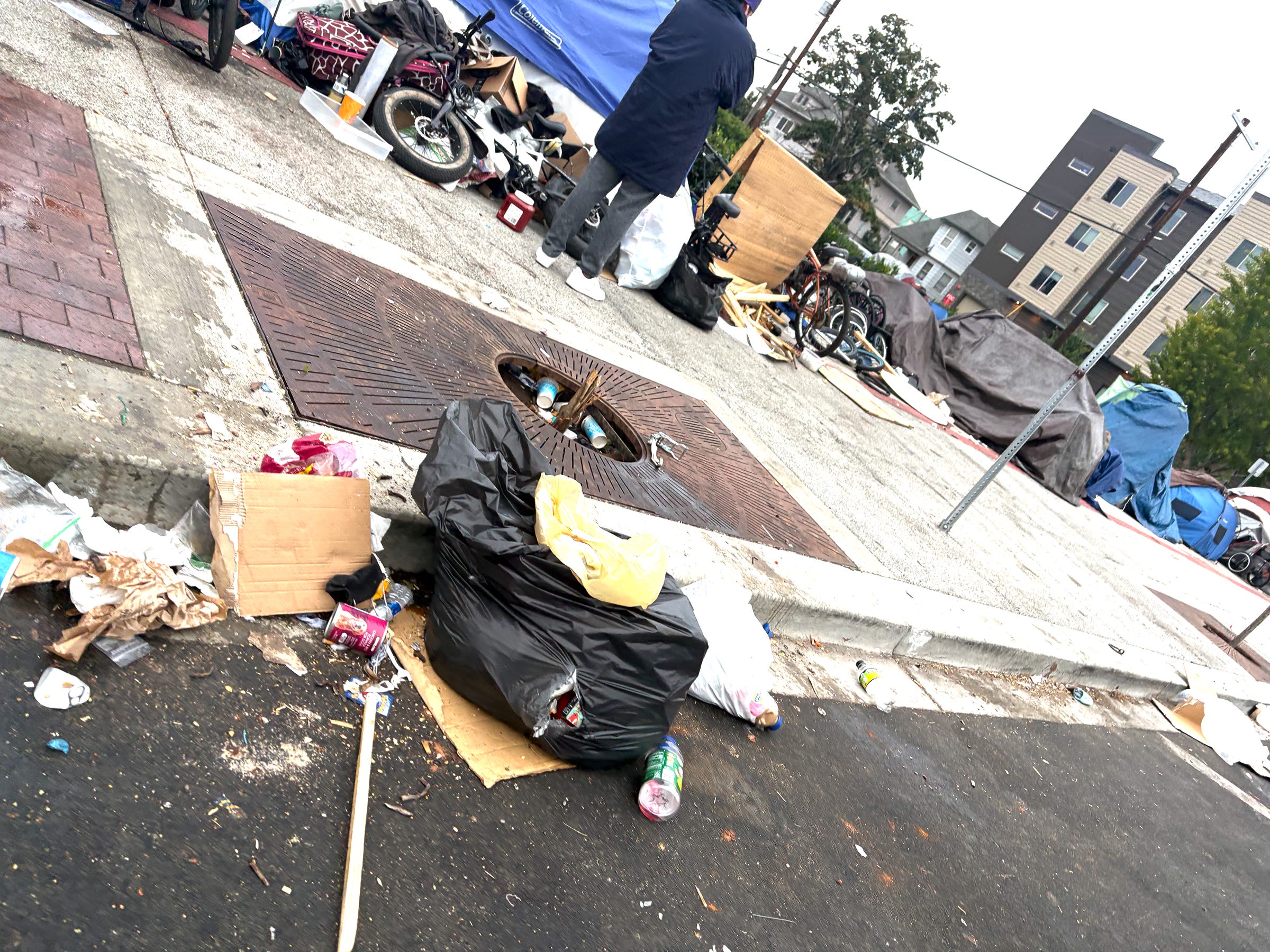
The homelessness debate isn’t just about homelessness. It’s about whether we’ve lost the ability to distinguish a boundary from an injustice. Increasingly, every government prohibition is treated as cruelty, every consequence as punishment, and every “no” as oppression.
One of the stranger arguments in the homelessness debate is that banning sidewalk camping violates the First Amendment. It doesn’t, because camping isn’t speech. The First Amendment protects what you say, write, publish, preach, protest, and advocate. It does not protect every action simply because you can explain it politically.
This isn’t a difficult distinction. Speech communicates. Conduct does something. Camping is conduct. It occupies public space, stores property, erects structures, blocks access, and excludes others from using what belongs to everyone. None of that becomes speech because someone says, “I’m making a statement.”
We understand this everywhere else. Driving 90 miles an hour to protest speed limits is still speeding. Refusing to pay taxes because you oppose the government is still tax evasion. Trespassing to protest private property is still trespassing. The political motive may explain the action, but it does not redefine it. Motivation doesn’t change categories.
If attaching a political message transformed conduct into speech, then every law could be escaped with a press release. Every zoning violation would become activism. Every act of vandalism would become performance art. Every trespass would become a constitutional case. The First Amendment would no longer protect speech; it would function as a universal exemption from ordinary law.
That’s why the distinction matters. Rights are defined by their object. Each amendment protects a specific kind of activity, not whatever someone chooses to associate with it. The Fourth protects against unreasonable searches, not every inconvenience imposed by government. Likewise, the First protects expression, not occupation. You have every right to argue that the city has failed the homeless. You do not acquire the right to convert a public sidewalk into a private campsite because your campsite expresses an opinion.
We’ve become careless with constitutional language. Increasingly, people treat rights as if they erase every rule they dislike. They don’t. The Constitution protects your freedom to speak against the government. It has never guaranteed your freedom to ignore the ordinary laws governing public space. Camping is a policy question. Speech is a constitutional right. Confusing the two doesn’t strengthen civil liberties; it empties them of meaning.
Ironically, however, this was never the real constitutional battle.
The Real Constitutional Question
The lawsuits that shaped homelessness policy across the West were not primarily First Amendment cases. They were Eighth Amendment cases. The argument was that enforcing anti-camping ordinances against people with nowhere else to sleep amounted to “cruel and unusual punishment.” In decisions like Martin v. Boise, courts in the Ninth Circuit reasoned that if every shelter bed was full, sleeping outdoors became an unavoidable consequence of being homeless. Punishing someone for sleeping in public, the courts concluded, was effectively punishing them for their status rather than their conduct.
That reasoning carried enormous consequences. Cities across the Ninth Circuit—including those throughout Washington and Oregon—became convinced that meaningful enforcement of camping ordinances could not begin until enough shelter existed for everyone. Whether or not that was the courts’ intent, many local governments interpreted the decisions as a legal warning: enforce too aggressively, and you’ll lose in court. The result was years of hesitation, litigation, and paralysis while encampments multiplied.
At first glance, that sounds compassionate. In reality, it rests on a profound confusion. The Constitution forbids cruel punishment. It does not require the government to permit every act born of hardship. Poverty is tragic. Addiction is tragic. Mental illness is tragic. But tragedy does not transform every “no” from the government into unconstitutional punishment.
More importantly, look at what this reasoning produced. Cities across the West became convinced they could not meaningfully enforce camping laws until they had enough shelter for everyone. So they waited. They debated. They commissioned studies. They postponed action. Meanwhile, thousands of people continued living in tents, exposed to fentanyl, untreated psychosis, exploitation, violence, theft, disease, and the elements. Entire encampments became places where the strong preyed on the weak and addiction became the organizing principle of daily life.
And somehow this was called compassion.
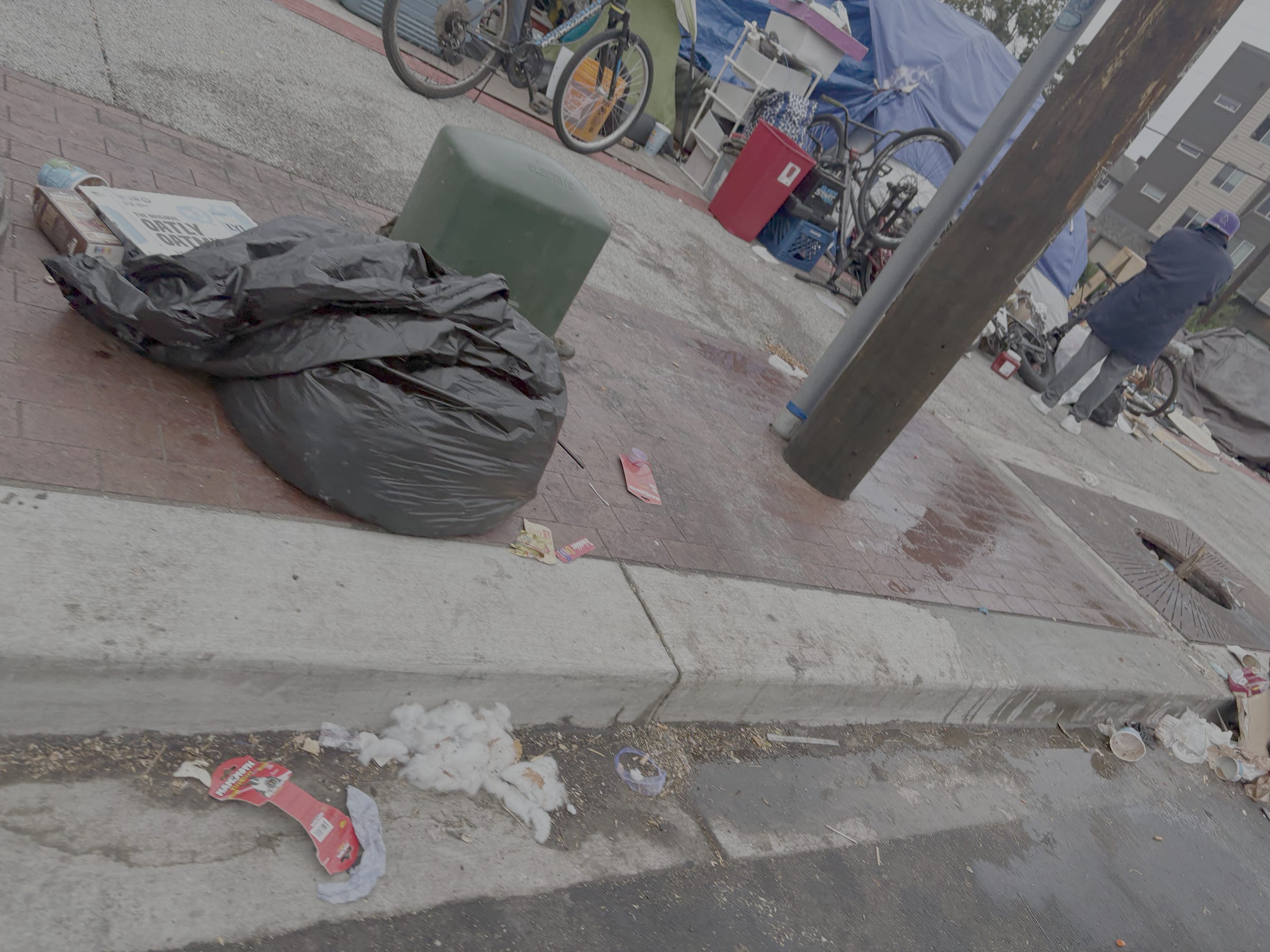
If we are going to use the language of cruelty, let’s use it honestly. Is it more cruel to tell someone they cannot erect a campsite on a public sidewalk, or to leave them there for years while addiction destroys their body, criminal networks exploit them, and exposure slowly kills them? Is it more humane to enforce standards that push people toward treatment and shelter, or to normalize a way of life in which overdose, infection, assault, and despair become ordinary?
The modern instinct is to equate any government prohibition with oppression. If the state says “no,” it must be punishment. But civilization depends on the state’s ability to say no. No, you cannot sleep in the airport terminal. No, you cannot build a shack in a public park. No, you cannot permanently occupy a sidewalk. Those are not acts of cruelty. They are the ordinary boundaries that make shared public life possible.
The deeper tragedy is that we have mistaken permission for compassion. Allowing someone to remain in conditions that strip away dignity, destroy health, and shorten life is not mercy simply because the government declined to intervene. Sometimes refusing to enforce boundaries is not kindness at all. Sometimes it is abandonment dressed up as empathy.
Thank you for the thoughtful reflection.