
In many ways, I think I would like being Catholic. I would rather receive the Eucharist every week than attend another concert with a sermon attached. I love vestments, sacred art, and fasting during Lent. I appreciate entering a church that seems to expect God to be holy. I understand the appeal of belonging to a visible Church that claims continuity with the apostles and can speak amid Christian division.
Still, I remain Protestant.
I remain Protestant because I believe the Church must be corrected by the Word it preaches. Serious biblical preaching and ordinary Christians knowing their Bibles matter because churches can become practiced at defending what they should repent of. Pastors, creeds, councils, and tradition have real authority. Sola Scriptura means that Scripture alone is the Church’s infallible rule. Every other teacher remains teachable.
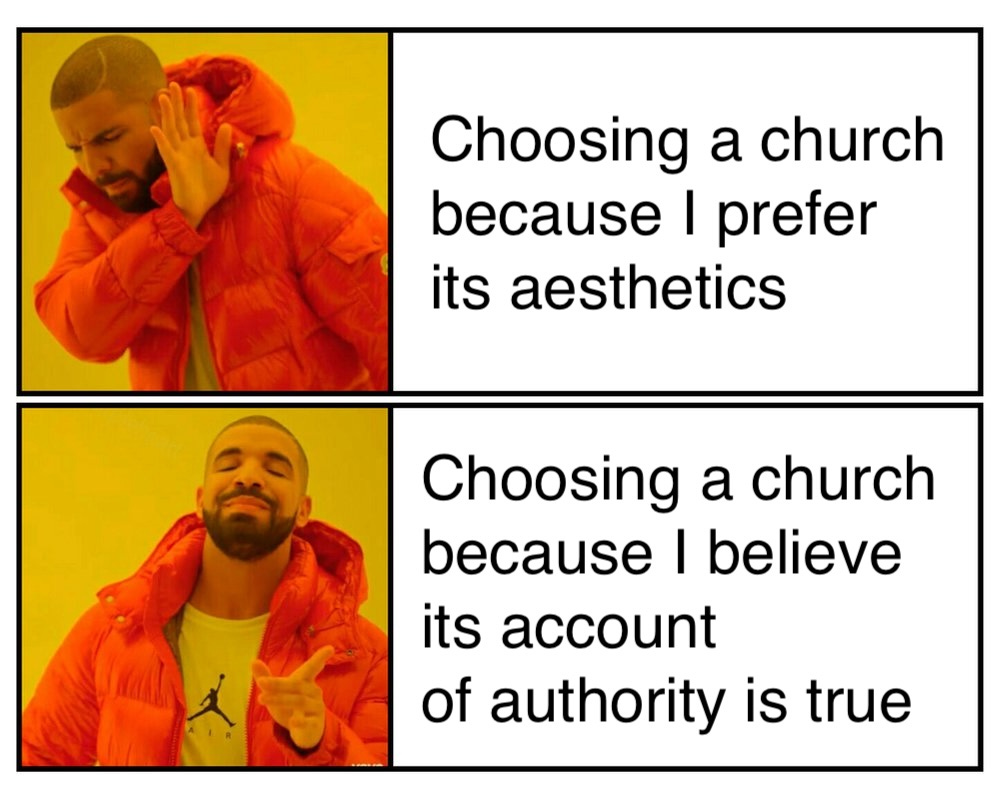
Catholics have two fair questions. “Where does Scripture teach that? And where does Scripture tell you which books belong in it?” Protestants cannot demand biblical grounds for everyone else’s doctrines and excuse themselves from providing their own. Nor can we pretend our Bibles arrived without the Church. Christians preserved these books, read them in worship, and handed them down. We depend upon their testimony.
Yet, does that dependence undo our argument?
Imagine two business partners. One says, “Our signed contract has the final say.” The other asks, “Where does it say that?”
“There is no single sentence using those words. But look at how the agreement works. It defines our obligations, limits our managers’ authority, and requires their instructions to conform to its terms. Taken together, those provisions support my conclusion.”
Then the other partner asks, “How do you know this is the version we signed?” The first produces an email from their attorney confirming that this is the signed copy.
“Hold on. You said the contract has the final say. Now you’re letting an email settle the question!”
“A different question. The email confirms which contract we signed. My argument about its authority comes from the contract itself.”
The Protestant case likewise has two tasks. We must establish Scripture’s authority from its teaching and explain how we recognize its books.
1. Why Should Scripture Have the Final Say?
Catholics agree that Scripture is inspired and that church teaching must serve God’s Word. They believe Scripture and Sacred Tradition transmit the apostolic faith, which the Church’s teaching office authoritatively interprets. Announcing that the Bible is inspired therefore settles something both sides already believe. We disagree over whether Christ also protects certain judgments of a continuing teaching office from error. (Dei Verbum 9–11)
Paul describes the Church as built upon “the foundation of the apostles and prophets” (Ephesians 2:20). He instructs Timothy to entrust what he received to faithful people who can teach others (2 Timothy 2:2). The apostles supply the foundational teaching. Later ministers preserve and transmit it. Holding office does not turn a later teacher into another Paul.
That apostolic teaching carried authority whether spoken or written. Paul told Christians to hold the traditions received “by word of mouth or by letter” (2 Thessalonians 2:15). Protestants must account for both. The question is how we receive that teaching after the apostles’ deaths.
Luke wrote so that Theophilus could know the certainty of what he had been taught (Luke 1:1–4). John selected his material so that readers might believe and have life in Christ (John 20:30–31). Paul required his letters to circulate among churches, and Peter placed them alongside “the other Scriptures” (Colossians 4:16; 2 Peter 3:15–16). These writings preserve testimony so that people who never met the apostles can nevertheless receive their teaching. Scripture is “God-breathed” and equips God’s servant for every good work (2 Timothy 3:16–17).
The authority of a teacher remains bounded by the teaching entrusted to him. Jesus condemns tradition that nullifies God’s command (Mark 7:8–13). Paul places even himself beneath the gospel already preached (Galatians 1:8–9). An officeholder cannot rescue false teaching by pointing to his office.
Protestants understand these writings to contain everything necessary for the Church’s faith and obedience. The theological term is material sufficiency. Formal sufficiency means that Scripture can govern the Church without another infallible interpreter. Neither claim excuses us from studying difficult passages, learning from earlier Christians, or listening to our pastors. Both require us to explain why Scripture can perform the work we claim for it.
Irenaeus expected readers to recognize why Gnostic interpretations failed by comparing them with truths “clearly and unambiguously” expressed in Scripture. Clear passages should govern obscure ones. His argument required readers to examine the evidence and understand why one interpretation was better than another. (Against Heresies 2.27.1–3)
Cyril of Jerusalem told his hearers not to give even him “absolute credence” without scriptural proof. He expected Christians under his instruction to recognize the biblical grounds for what he taught. His authority did not excuse him from showing his work. (Catechetical Lectures 4.17)
Neither man needed to be told that Christians disagreed about Scripture. They were addressing disagreement through arguments their readers could understand and assess. Their appeals do not settle every later dispute about church authority. They do show that disagreement need not leave Christians helpless until an office supplies an answer.
Appealing to an infallible interpreter would still leave Christians reading and interpreting that interpreter’s words. A council’s decree must be understood before it can be obeyed. If people can understand an authoritative decree despite disagreements about its meaning, disagreement alone cannot establish that they are unable to understand Scripture.
Understanding the teaching and deciding how a church will act are related responsibilities. Pastors must teach, councils must judge controversies, and churches must discipline. The Constitution provides a limited analogy. Courts apply a written standard through judgments that govern public life without becoming incapable of error. The need for a judgment does not establish that the judge must be infallible.
Christians therefore owe their churches a presumption of submission and must give scriptural reasons for dissent. Being able to question a ruling does not make obedience optional. A Christian who dismisses every unwelcome judgment has not defended sola Scriptura. He has appointed himself its replacement.
I receive Scripture as the Church’s final rule because these writings preserve the apostolic teaching, equip the Church, and supply the standard by which later teaching is judged. Claims that necessary apostolic doctrine survives outside these writings, or that a continuing office interprets them infallibly, require evidence of their own. The Church’s need for faithful teachers cannot supply that evidence by itself.
2. How Do We Know Which Books Are Scripture?
Protestants received their Bibles through the Church. We should be grateful enough to admit it. Christians copied these books, read them aloud, taught them to their children, and distinguished them from other writings. The question is whether we must believe that the Church performed this work infallibly before we can trust what it handed down.
Historical evidence is critical, but it cannot do everything. Establishing that Paul wrote Romans is different from establishing that God inspired it. Authorship, circulation, public reading, and reception tell us how a writing entered Christian life. They do not, by themselves, prove that God spoke through it.
The Protestant account therefore includes the Spirit’s witness through Scripture as the Church reads, preaches, and obeys it. This is more than an individual feeling strongly about a book. The writings’ testimony to Christ, their agreement with the apostolic faith, their historical origins, and their reception within the Church belong together. Confidence rests upon that combined witness. Our recognition does not acquire the inspiration of what we recognize.
The process begins within the New Testament. Paul required his letters to be read publicly and exchanged among churches (1 Thessalonians 5:27; Colossians 4:16). Peter placed Paul’s letters alongside “the other Scriptures” (2 Peter 3:15–16). These writings were already teaching and governing churches before later councils gathered their names into lists.
However, recognition did involve real disagreements. Eusebius distinguished widely accepted writings from books still disputed, including James, Jude, and Second Peter. He also recorded disagreement over Revelation. The early Church possessed neither complete uncertainty nor immediate agreement about every book. It inherited a substantial common collection and worked through disputed boundaries. (Church History 3.25)
Athanasius listed our twenty-seven New Testament books in 367. He described them as handed down and received as divine. He also distinguished canonical writings from books useful for instruction. Here is a bishop exercising authority through judgment about an inheritance. His letter does not present itself as the event that first made these books authoritative. (Festal Letter 39.3–7)
Local councils, including Hippo and Carthage, helped consolidate that reception. Their decisions mattered. But the Church’s recognition did not begin with a universal council handing an otherwise empty-handed Christianity its New Testament. Books circulated, churches compared their inheritance, teachers disputed particular writings, and agreement developed. Later definitions addressed a collection already received for centuries.
A Catholic can understand this process as Sacred Tradition operating under the Spirit’s protection. Decentralized recognition is compatible with that belief. It does not establish the belief. Calling the reception infallible adds a claim about God’s protection to the history being described. The word Tradition cannot do that work merely by being capitalized.
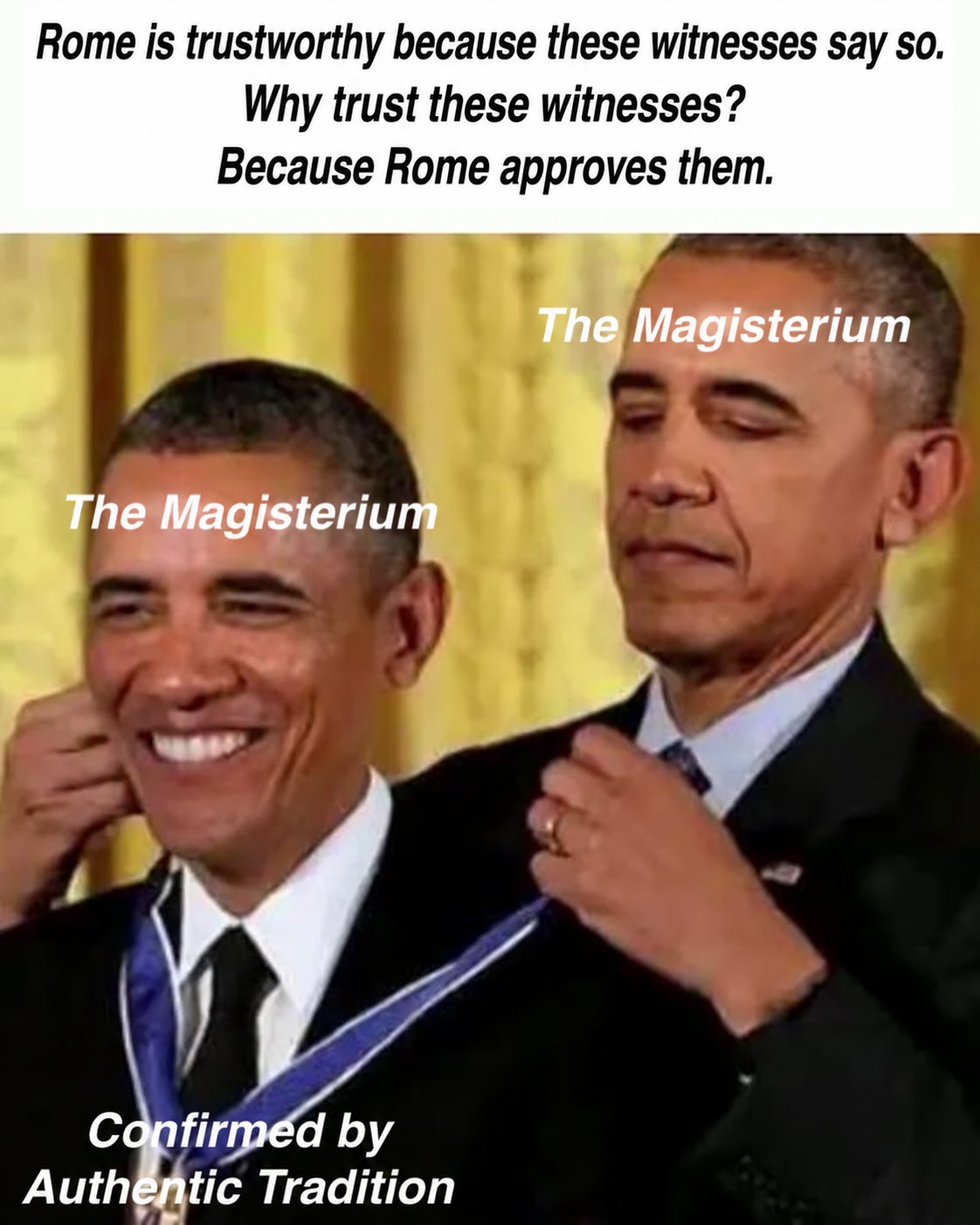
The same care is needed when Tradition is offered as evidence for Rome’s authority. Ancient testimony can supply evidence. But if we accept particular testimony as decisive only because Rome approves it, that testimony cannot then serve as independent proof that Rome deserves our trust. The argument needs grounds beyond the institution’s endorsement of its own witnesses.
Protestants owe an account of their confidence too. We cannot simply call the process providential and consider the question answered. We must examine the books, their origins, their reception, and their agreement with the apostolic faith. We receive them within the Church’s worship and teaching, trusting the Spirit who speaks through them. This warrants confidence without requiring us to claim that our judgment cannot be mistaken.
The point is modest. Yet no less consequential. The Church can hand us something more authoritative than its own judgment. Its testimony gives us reasons to receive Scripture. Scripture can then give us reasons to correct the Church. Gratitude for receiving the Bible does not require believing that those who handed it down have nothing left to learn from it.
The Certainty I Would Like
Christian division is painful. I have often wondered why Christ would give his Church a revelation that Christians can read so differently. Catholicism offers something Protestantism does not. It offers a universal institution capable of bringing selected controversies to formal closure. That is a genuine advantage on paper.
Yet it remains a distinction without a difference because the Magisterium provides no exhaustive, infallible interpretation of Scripture. Moreover, Catholics must still interpret biblical texts, historical evidence, councils, papal statements, and the authority belonging to each.
Anxiety about being wrong can make a final answer feel indispensable. However, our desire for reassurance cannot change the reality of what we have been given.
Corinth was divided while Paul was alive (1 Corinthians 1:10–13). Galatia departed from the gospel after hearing it from an apostle (Galatians 1:6–9). These churches needed correction despite having received authoritative teaching. Christ’s faithfulness did not spare them the work of listening, repenting, and learning again.
I remain Protestant because I find grounds for receiving the apostolic writings as the Church’s final rule and for trusting the Church’s recognition of them. That leaves plenty of work for pastors, councils, and ordinary Christians. We must read carefully, judge humbly, and submit to correction. I would like a Church that could spare us some of that difficulty. But I must receive the Church Christ has given us, even when I wish he had arranged things differently.
You could always become Anglican 😉 Protestant & smells and bells 😇